A structural analysis of clarity, precision, and decision-making
Academic writing is often described as difficult because of complex language or disciplinary conventions. While these factors contribute at the surface level, they do not explain why writing remains challenging even for experienced scholars.
The primary source of difficulty lies in the cognitive demands imposed by academic genres. Writing in this context requires simultaneous management of multiple intellectual obligations, many of which are implicit and poorly articulated. This article examines five structural factors that contribute to the cognitive complexity of academic writing.
1. Multi-audience design and rhetorical load
Academic texts are written for multiple audiences at once. A single manuscript must satisfy:
- peer reviewers evaluating methodological and conceptual rigor
- editors assessing contribution and positioning
- domain experts checking technical accuracy
- future readers seeking clarity and reuse
As a result, individual sentences often serve several functions simultaneously. A claim may need to report findings, justify choices, demonstrate engagement with prior work, and pre-empt criticism.
This creates rhetorical load at the sentence level. Prose density reflects strategic risk management rather than stylistic preference.
2. Precision does not ensure clarity
Precision is essential in academic work, but it does not automatically produce clarity.
Precision typically increases complexity through:
- explicit boundary conditions
- epistemic hedging
- detailed operational definitions
Clarity, however, depends on structural organization and emphasis. When conceptual structure is unstable, writers often compensate by adding specification at the sentence level. You can look the example as follow:
“X significantly increased Y.”
vs.
“X was associated with a statistically significant increase in Y within the predefined subgroup after adjustment for potential confounders.”
The second version is more precise, but in decrease the approachable ability. Textual density frequently masks unresolved conceptual decisions.
3. Dual cognitive load in non-native academic writing
This is really my experience and the main pain point of my colleague. For non-native English writers, academic composition involves two concurrent processes:
- developing arguments under epistemic uncertainty
- monitoring linguistic accuracy and disciplinary register
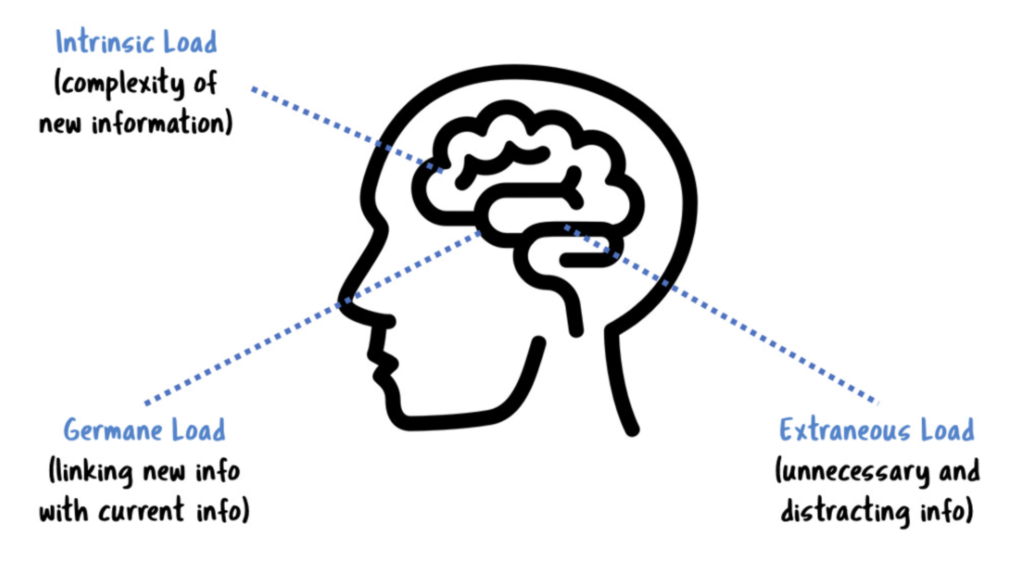
This dual load often leads to cautious phrasing, excessive qualification, and avoidance of syntactically simple constructions. These patterns reflect strategic overcompensation rather than grammatical weakness.
Complexity, in this context, functions as a signal of competence rather than a conduit for meaning.
4. Epistemic decision-making as the main bottleneck
The principal difficulty in academic writing is rarely grammatical. It lies in epistemic judgment, including decisions about:
- evidentiary sufficiency
- claim scope
- acceptable levels of uncertainty
Until these judgments stabilize, writing remains provisional. Revision persists not because sentences are inadequate, but because underlying reasoning has not converged.
Complicated prose is often a symptom of incomplete thinking.
5. Separating generative and evaluative stages
Many writers attempt to generate ideas and polish language simultaneously. This conflation increases cognitive friction.
Writing becomes more manageable when:
- drafting is used to clarify thinking
- revision is delayed until conceptual commitments stabilize
- clarity is treated as a structural outcome, not a stylistic trick
So again, workflow is really important. From my experiences, while I learned python, clinical research, and statistics at the same time, the only rule I map everything and just do the next right thing.
Clear academic writing emerges through revision that resolves conceptual issues before refining language.
Conclusion
Academic writing is cognitively complex not because scholars seek obscurity, but because the genre demands precision, accountability, and decision-making under uncertainty.
When clarity is understood as a cognitive achievement rather than a linguistic technique, writing becomes more tractable. Precision remains essential, but sentences no longer bear the burden of unresolved analysis. As thinking gains structure, writing follows.

Comments
4 responses to “Why Academic Writing Is So Hard (and it’s not your English)”
[…] academic writing problems are thinking problems, not language […]
[…] is solved by thinking differently before […]
[…] Reviewers, however, are not asking for bold language.They are asking for clear thinking. […]
[…] “Why is this safe for us to publish?” […]