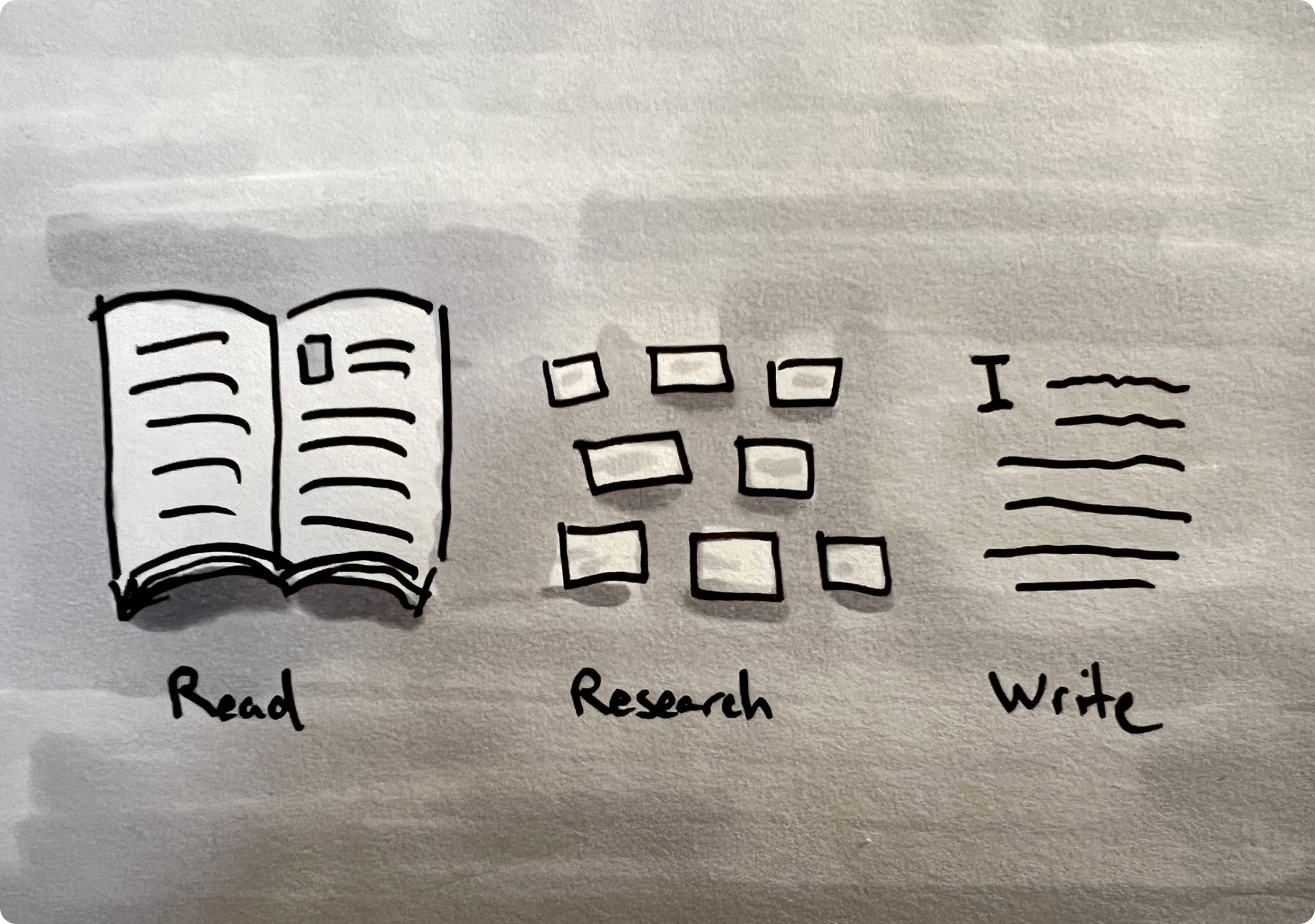
How to know your research question is ready to be tested, not perfected
Many researchers share the same uneasy feeling: they’ve read extensively, yet still don’t feel ready to write. So, when we should start writing research, instead of continue reading?
The problem is rarely a lack of information. More often, it’s the nagging sense that the research question isn’t “solid enough” yet. Something still feels incomplete, uncertain, underdeveloped. So the reading continues—sometimes for weeks or months.
This hesitation makes sense. Reading feels safe. It doesn’t demand commitment or expose weak assumptions. Writing, however, forces decisions. It makes uncertainty visible.
But here’s the issue: reading more doesn’t always clarify a research question. Often, it just multiplies the unresolved possibilities.
The illusion of progress: when reading replaces decision-making
Early in research, reading creates a powerful illusion of progress. Each new paper adds context. Each new method opens another option. Each framework suggests an alternative direction.
But reading and writing serve fundamentally different purposes:
Reading expands possibilities.
Writing collapses them into commitments.
When researchers feel stuck, it’s rarely because they haven’t read enough. It’s because they haven’t crossed the threshold where thinking must shift from exploratory to selective.
At some point, continued reading stops clarifying the question and becomes a way to postpone making decisions.
What does “ready to write” actually mean?
A research question ready to write isn’t perfect. It isn’t final. It isn’t guaranteed to be correct.
It’s simply sufficient.
A sufficient research question has three characteristics:
- It can be provisionally addressed using available data, literature, or methods
- It’s specific enough to be wrong in an informative way
- It can support a coherent argument, even if that argument needs revision later
This requires a mindset shift—from pursuing clarity as an end state to accepting sufficiency as a working condition.
Writing doesn’t require certainty. It requires a question that can withstand being tested, even briefly.
When to stop reading: three practical signals
There’s no universal rule for when to stop reading, but three signals often indicate that continued reading is no longer the bottleneck:
1. You can explain your idea without citing papers
If you can’t describe your research question in your own words—without immediately reaching for references—the problem isn’t insufficient reading. It’s insufficient conceptual ownership.
Try writing a short, citation-free paragraph. It’s often the fastest way to expose what’s still unclear.
2. New papers feel familiar rather than illuminating
When additional papers repeat the same variables, methods, and conclusions, reading has shifted from exploration to refinement. At this stage, writing will clarify priorities more effectively than accumulation.
3. Writing feels uncomfortable rather than confusing
Confusion suggests lack of understanding. Discomfort suggests commitment.
When writing begins to feel risky—when you worry about being wrong rather than not knowing enough—that’s usually a sign the question is mature enough to engage with seriously.
Writing as diagnostic, not declaration
A common fear: writing too early locks you into a flawed position. In reality, the opposite is often true.
Writing doesn’t finalize a question—it stress-tests it.
In my own work, many research questions only reveal their weaknesses when I try arguing for them in complete sentences. Ambiguities that feel manageable while reading become impossible to ignore when writing. Assumptions that seemed reasonable collapse under scrutiny.
This isn’t failure. It’s progress.
Writing transforms vague uncertainty into specific problems you can actually address.
A minimal workflow: from reading to writing
A simple transition can help reduce friction:
- Write one provisional paragraph answering your research question as it currently stands
- Write one paragraph explaining why this answer might be incomplete or wrong
- List what additional reading or data is needed specifically to resolve those weaknesses
From here, reading is no longer open-ended. It becomes targeted, purposeful, and limited.
Clarity follows commitment
Academic writing is difficult not because it demands perfect language, but because it demands cognitive commitment under uncertainty. The hardest part isn’t grammar or vocabulary—it’s deciding what you’re willing to argue for, even temporarily.
The right moment to write isn’t when your research question is flawless. It’s when the question is honest enough to be tested.
Clarity doesn’t emerge before writing. It emerges through it.